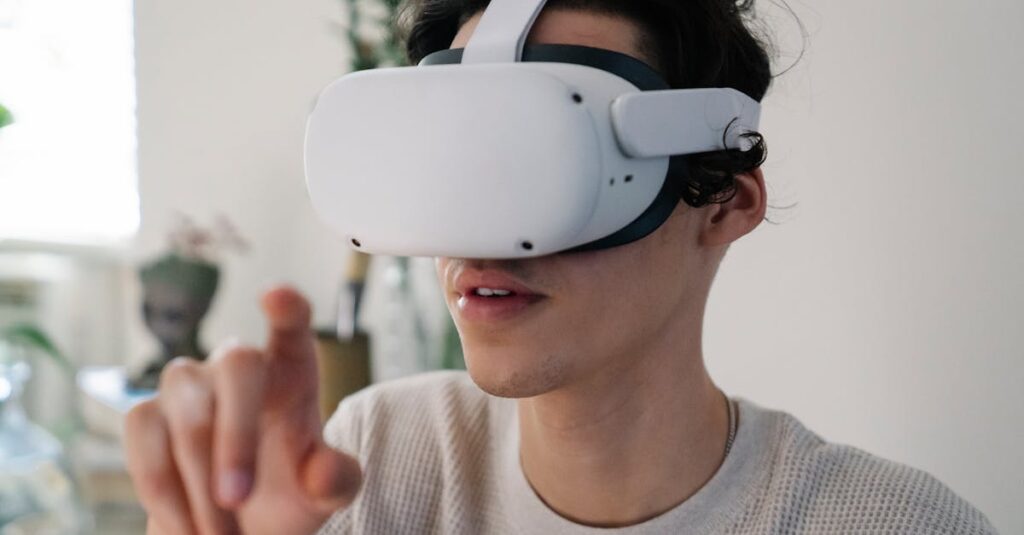
Imagine stepping into a hospital, and instead of dull walls and medical jargon, colorful digital displays lead you through your treatment process. Sounds like science fiction, right? Well, with augmented reality in healthcare, it’s becoming a reality. This revolutionary technology merges the physical world with digital elements, making medical procedures and patient interactions not just easier but also more engaging. Join us as we explore how AR is changing the face of healthcare for the better.
Augmented Reality In Healthcare
Augmented reality, or AR, superimposes digital information onto the real world, allowing us to see things that are not physically present. We’re talking about interactive 3D models, real-time data overlay, and immersive experiences that enhance how we perceive and interact with our environment. Unlike virtual reality, which fully immerses users in a digital realm, AR blends the virtual with the physical, making it particularly useful in fields like healthcare where real-world application is crucial.
Applications of Augmented Reality In Healthcare
The applications of augmented reality in healthcare are as diverse as they are exciting. From surgical planning to patient education, AR helps professionals at various levels. Surgeons can use AR to visualize complex structures during procedures, guiding them with precision. Medical students benefit from interactive learning experiences where they can manipulate 3D models of organs and systems. Also, AR is proving beneficial in physical therapy, where patients can engage in guided exercises enhanced by visual cues.
Benefits of Augmented Reality For Medical Professionals
For medical professionals, the benefits of augmented reality are substantial. First, it enhances accuracy in procedures, reducing the risk of errors. Imagine having a holographic display of a patient’s anatomy right in front of you during surgery, talk about a game-changer. Also, AR reduces the time spent on training, as medical professionals can practice skills in realistic scenarios without the associated risks. This leads to better-prepared and more confident practitioners, eventually benefiting everyone involved.
Impact on Patient Care and Engagement
AR isn’t just for the healthcare crew: it dramatically improves patient care and engagement as well. Patients can visualize their treatment plans through AR, making complex medical information more understandable. This visualization fosters a greater sense of control and involvement in their healthcare journey. Also, AR has been shown to reduce anxiety in patients, particularly children, by making the clinical environment feel less intimidating and more approachable.
Challenges and Limitations of Augmented Reality In Healthcare
While the promise of augmented reality in healthcare is enticing, it’s essential to acknowledge the challenges and limitations that come with it. Integration into existing practices can be complex, often requiring substantial investment in technology and training. There are also concerns about data privacy and security, as AR relies heavily on personal health information. Plus, not all medical professionals may be ready or willing to adopt this technology, which can lead to disparities in patient care.
The Future of Augmented Reality In Healthcare
Looking ahead, the future of augmented reality in healthcare is bright. As technology continues to evolve, we anticipate even more innovative applications in diagnostics, treatment, and patient interaction. Imagine AR glasses that display crucial data in real-time for healthcare professionals, or apps that allow patients to visualize their health stats with just a glance. As we push the boundaries of what’s possible, AR could become an integral part of everyday healthcare, revolutionizing how we approach medicine.