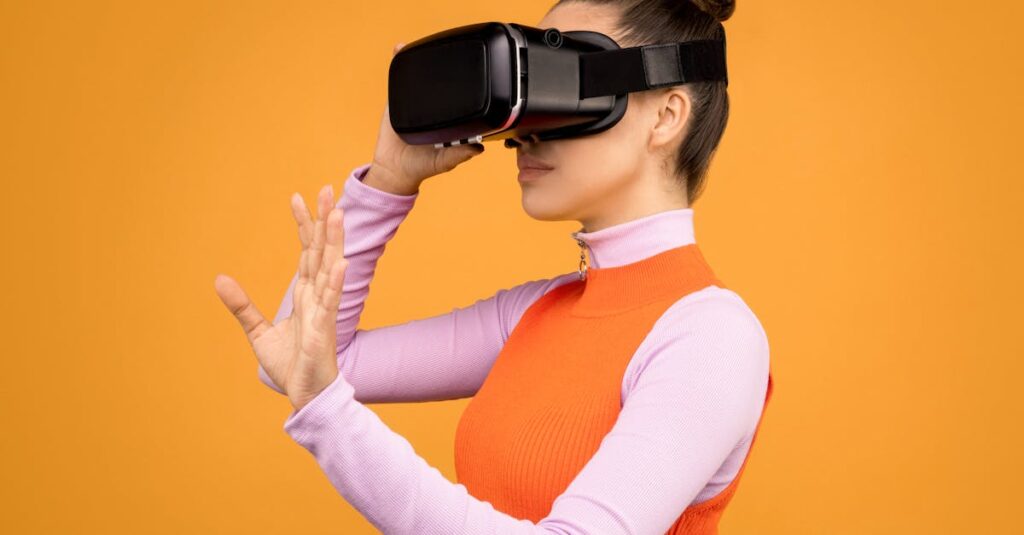
Have you ever wished you could step into a game or experience life from a completely different perspective? Well, with virtual reality (VR), that dream isn’t too far off. Virtual reality offers us an extraordinary ticket to immersive experiences that blend the boundaries of reality and imagination. In this text, we’re diving into the advantages of virtual reality, showcasing how this technology is infiltrating various aspects of our lives, from education to entertainment, and beyond. Let’s explore how VR can make our world a little more exciting and a lot more engaging.
Advantages of Virtual Reality
Imagine feeling like you’re standing on the surface of Mars or swimming with dolphins in the ocean, without leaving your living room. The enhanced immersive experience offered by VR is one of its most impressive advantages. It transports us directly into richly detailed environments that engage all our senses. We can look around and interact with the virtual world, making us feel like we truly belong. This sense of presence is not just exciting: it also leads to deeper emotional connections to the experiences we undergo, whether it’s a virtual museum tour or a fight against dragons in a fantasy game. The more real we can make it feel, the more likely we are to cherish and remember those experiences.
Applications in Education and Training
When we think about learning, we often picture a classroom filled with textbooks and lectures. But, VR is flipping that model on its head. In education, virtual reality offers us experiential learning opportunities that traditional methods simply can’t match. Why read about historical events when we can walk through a VR simulation of ancient Rome? Beyond history lessons, VR allows us to practice complex skills in safe settings. Medical students can conduct virtual surgeries, while aviation trainees can navigate planes in lifelike conditions. By immersing ourselves in these scenarios, we can master our skills while minimizing risks. This method not only increases retention but also builds confidence in real-world applications.
Improvement in Mental Health Treatments
Surprisingly, virtual reality is also making strides in the realm of mental health. It’s not just about fun and games. Therapists are utilizing VR for treatments such as exposure therapy for phobias, PTSD, and anxiety disorders. By creating controlled environments, patients can confront their fears at their own pace and with safety. We can witness dramatic improvements in therapy effectiveness when patients can navigate these scenarios without the overwhelming pressure of the real world. Also, relaxation simulations can effectively help individuals destress, giving us powerful tools to tackle mental well-being.
Revolutionizing Entertainment and Gaming
Let’s face it: we’ve all dreamed of being the hero in our favorite video game or movie. With VR, that daydream is becoming our new reality. The gaming industry is being revolutionized with immersive gameplay that lets us step right inside the game. We can now brawl with opponents or solve mysteries as if we’re part of the storyline. Beyond gaming, VR is changing the landscape of entertainment altogether. Concerts and events are now accessible from our homes, allowing us to feel the energy of live performances without the crowded venues. This level of engagement transforms passive consumption into active participation, and it’s only the beginning.
Potential for Remote Collaboration
In an increasingly digital world, collaboration is crucial, yet distance often separates us. Virtual reality offers a solution to this conundrum. Imagine attending a team meeting where everyone feels present, regardless of their physical location. With VR, that’s entirely possible. We can gather in virtual spaces to brainstorm, create, and innovate together without being in the same room. This technology not only enhances the experience but also democratizes participation, allowing us to break boundaries and connect with colleagues and clients around the globe as if we were sitting side by side.
Impact on Retail and Marketing Strategies
Virtual reality is also making significant waves in retail and marketing. Consumers are no longer limited to static images or descriptions: they can now step into virtual stores. VR enables us to try out products before purchasing, giving a firsthand experience that traditional shopping methods can’t replicate. Whether it’s trying on clothes in a virtual fitting room or seeing how furniture would look in our homes, these experiences bridge the gap between online shopping and real-world interactions. As businesses embrace VR, it creates exciting marketing opportunities to engage customers and encourage brand loyalty like never before.